
Bracelets, copper tubes and socks are accessories used with the Clark zapper; in this article, we’ll look at the pros and cons they may offer.
A useful tip for using the Clark zapper
To maximise the effectiveness of the Clark zapper, it is recommended that you vary the placement of the electrodes (feet, hands, hips, etc.) to ensure the frequency is transmitted effectively to all areas of the body, thereby avoiding any potential blockages caused by pollutants, fat, benzene, etc.
So you can use the copper tubes one day, placing them around your hips, then another day under your feet, then around your hips again, and so on. Some people even alternate the positions during a zapping session, using one electrode in their right hand and another on their ankles, and they’re quite happy with the results.
The aim here is not to force you to follow any particular method, but rather to show you all the options available that can be practised using the Hulda Clark zapper; it is then up to you to choose the method that suits you best.
It is worth noting that Hulda Clark has always favoured copper tubes, which have stood the test of time and contributed to the zapper’s reputation!
Hulda Clark’s bracelets and zapper
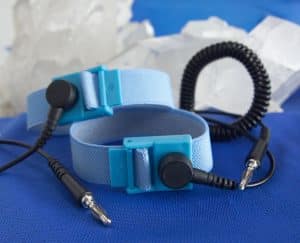
They were originally designed to eliminate static electricity (and may still be manufactured for this purpose) generated by the human body. They are designed to conduct a very low-intensity direct current (a few microamperes).
The wristbands for the Clark Zapper have a smaller contact area than the copper electrodes and socks, so you need to ensure that sufficient pressure is applied for the microcurrent to flow properly. The disadvantage of the wristbands is that, because their contact area is small, less current will flow through the body; they may also cause a noticeable ‘tickling’ sensation if you have thin skin. This concentration of current can also more easily lead to minor skin burns; a damp paper towel can be placed over the wristbands to counteract this and increase the contact area.
The main advantage of the Clark Zapper wristband is, above all, its ease of use; it is ergonomically designed and allows you to keep your hands free during a Zapper session. Unlike electrodes, there is no need to moisten them before starting a Clark Zapper session.
Tip : To change the location where the frequency is applied, the Clark zapper wristbands can be positioned higher up on the forearm.
Copper tubes and the Clark zapper
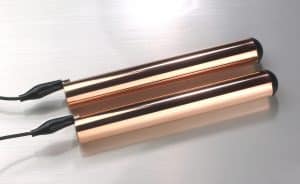
The copper tubes of the Clark Zapper are versatile, reusable, practical and require little maintenance. They can be held tightly in your hands, worn around your waist, placed under your feet, or even tucked into your socks around your ankles whilst you are sitting. It is good practice to find two distant areas of the body and to keep the electrodes moist at all times.
Take care with the head, as metal dental implants reduce the effectiveness of the Hulda Clark zapper, and because this vital organ is relatively small. Dr Clark also recommended using these tubes, which are placed under the feet. As the skin on the feet is less contaminated than the palms of the hands, this improves the effectiveness of the treatment.
The socks and the Clark remote control
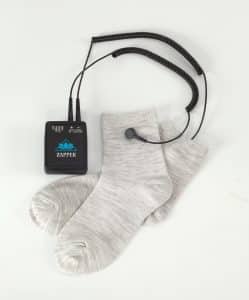
The socks for the Clark Zapper have a larger contact surface than the copper tubes and wristbands; the pressure is applied naturally to ensure the microcurrent flows properly, and, unlike with the copper tubes, there is no need to dampen the socks.
Like wristbands, socks are a valuable aid in simplifying Hulda Clark’s zapping sessions if you wish to zap that particular area. This is particularly true as Dr Clark found the treatment to be more effective on the feet, since the nerve endings there are less clogged with insulating toxins.
When it comes to care, hand washing is generally recommended to extend the life of the conductive fibres inside the socks.
[zappers_clark_recommandations_en]